Kitesurfing vs Kiteboarding: Equipment, Disciplines and Which to Learn
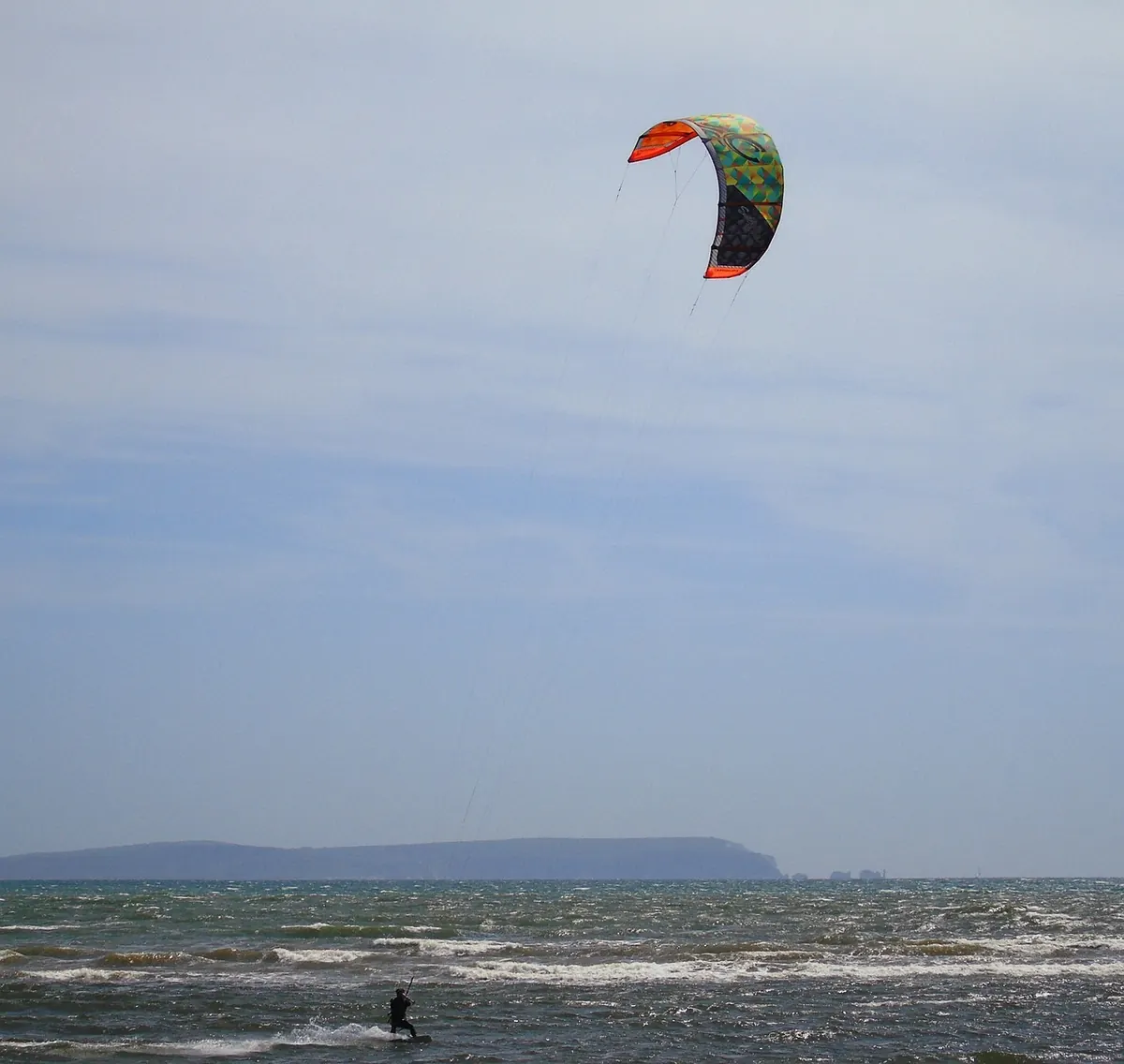
Stand on a British beach in a decent summer breeze and the word you hear is kitesurfing. Read a forum thread started in California and it's kiteboarding. Same wind, same kites, same first-day bruises. The two words describe one sport, and the distinctions worth worrying about aren't in the name at all — they're in what you're standing on and where you plan to ride. Get those clear and choosing your first board becomes much easier.
Kitesurfing and kiteboarding are used interchangeably across most of the industry. The UK and Europe lean towards kitesurfing; North America and much of the online world lean towards kiteboarding. Shop listings mix them freely, so a "kitesurfing harness" and a "kiteboarding harness" are the same piece of kit.
There is one nuance. Some people use kiteboarding as the umbrella term for anything powered by a kite: kitesurfing on water, landboarding on a mountainboard, snowkiting on snow, kite buggying along a beach. In that reading, kitesurfing is the water-based branch of kiteboarding. It's a useful distinction when you're reading about equipment, because a landboard and a twin-tip do completely different jobs.
If you're booking a lesson, either word will get you on the water. If you're buying gear, what matters is the discipline.
Every kitesurfing setup covers the same basics, with the board changing according to the discipline.
None of this needs buying before your first lesson. In fact, waiting is sensible — your weight, your local wind and your chosen discipline all change what suits you.
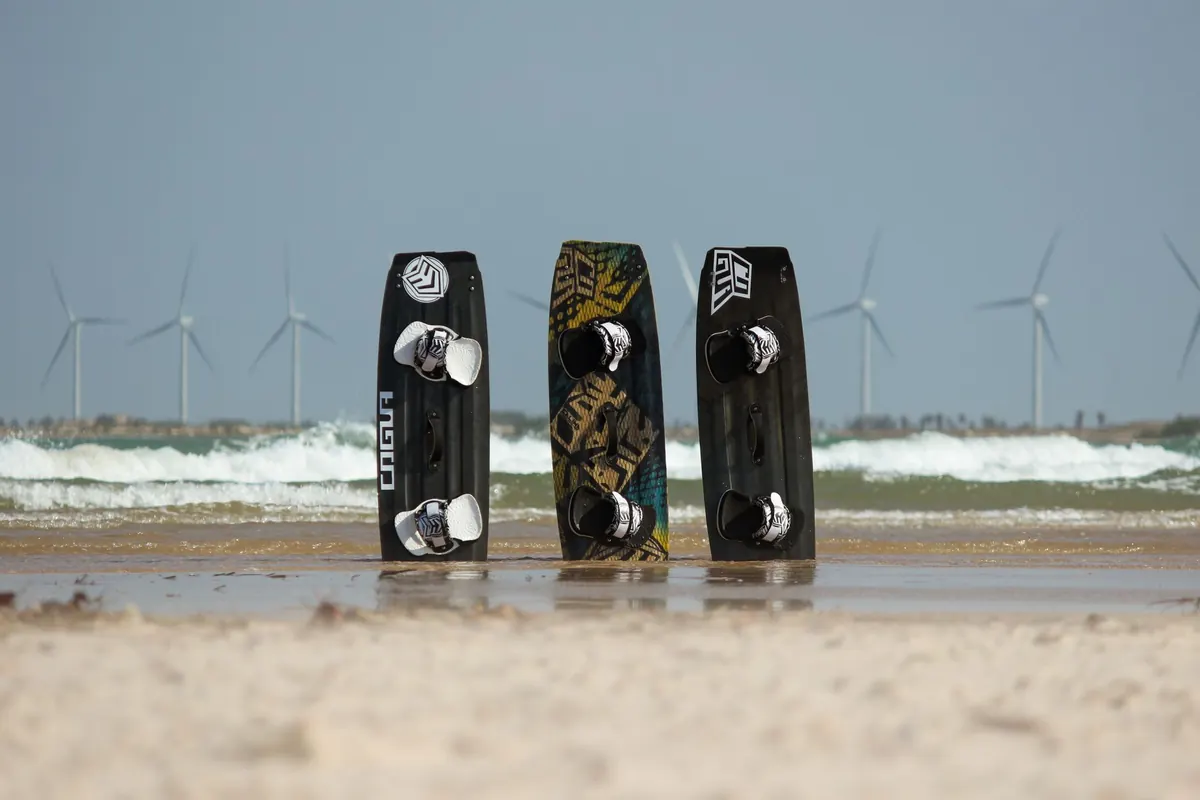
A twin-tip is a symmetrical board with a strap or binding at each end. You ride it either way round, which means there's no wrong direction and no complicated foot change. That symmetry is why it's the standard learning board everywhere, from shallow lagoons to choppy North Sea beaches.
It's also the most versatile. The same board carries you through your first upwind tacks, then into your first jumps, then into hooked and unhooked freestyle. Flat water, chop and small onshore waves all work. If you want to jump, spin, grab or ride obstacles, this is your platform.
Roughly in order: water start, riding both directions, edging and going upwind, then transitions and turning without dropping the kite. After that come jumps, then rotations, then unhooked tricks. Most riders spend a season or two working through the first half of that list, and that's normal.
Wave riding swaps the twin-tip for a directional board — a surfboard shape, occasionally a dedicated kite wave board — ridden strapped or strapless. The point isn't to jump; it's to get onto a wave and ride it down the line with the kite parked and drifting.
It rewards different skills: reading a swell, timing a bottom turn, gybing to keep your feet in the right place, and managing a drifting kite without looking at it. The reward is a smoother, more surf-like feel than any other discipline offers. It's a natural next step for riders who grew up surfing, and a satisfying one for anyone with access to a reliable Atlantic swell.
A hydrofoil lifts the board clear of the water on a mast and wings. Drag drops, the ride goes quiet, and you can stay out in wind that would leave you underpowered on a twin-tip. Different foil setups suit different goals: freeride foils for general riding, surf foils for waves, race foils for speed and steep upwind angles.
The trade-off is a steeper learning curve. The foil is sharp, the board can breach and drop you quickly, and holding a steady height takes practice. The usual advice is to fall away from the board rather than towards it, keep your feet light, and expect a few sessions of porpoising before it clicks. Many riders keep a twin-tip for windy days and foil when it's light.
Foiling also overlaps with wing foiling, which uses the same style of foil board but a handheld wing instead of a kite. They're separate disciplines, though the foil skills transfer between them.
Learn on a twin-tip, at a school, in flat water. That's the short answer and it holds for almost everyone. The board is forgiving, the wind range is broad, and the skills you build — kite control, body position, edging — carry into every other discipline. Wave riding and foiling both assume you can already fly the kite without thinking about it.
Once you're riding upwind consistently in both directions, the next step depends on what you actually enjoy:
Book lessons with a recognised school and ask about instructor qualifications and safety cover. Learn on their kit rather than buying early. Practise kite handling on the beach, not only on the water, and make sure you can body drag, self-rescue and pack down on the water before you ride unassisted.
Keep a simple log: date, spot, wind direction and strength, kite size, and what you worked on. Patterns appear fast, and you'll stop repeating the same frustrating session. Check forecasts, tides and local rules before every session — some beaches restrict kiting near swimmers, harbour entrances or wildlife areas.
Never ride alone as a beginner, and get proper instruction rather than teaching yourself from videos. The terminology debate will run for years yet. The learning order won't change: kite skills first, twin-tip second, then pick your discipline once you know what you genuinely enjoy.
Photo: Garyuk31 / Pixabay
Previous Post
10 Common Kitesurfing Mistakes Beginners Make (and How to Correct Them)
Next Post
How to Body Drag in Kitesurfing: Step-by-Step for Board Recovery and Self-Rescue